 Get in touch
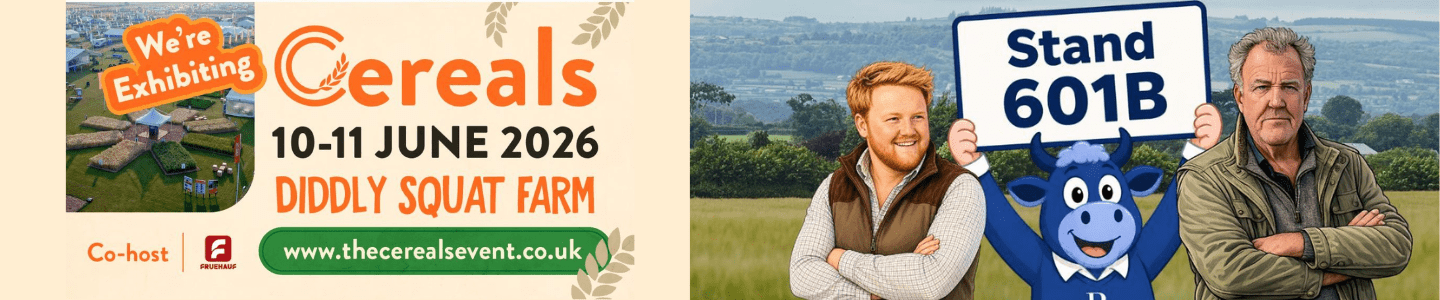
As the farming industry looks ahead to Cereals 2026, conversations around the future of British agriculture are becoming broader, more practical and more connected.
Cereals has long been known as the UK’s flagship arable farming event, bringing together farmers, suppliers, innovators and agricultural businesses to explore the latest developments in crop production, machinery, agronomy and farm technology. But in 2026, the event will also provide an important opportunity to discuss a bigger question: how can different sectors of farming work together to build more resilient, profitable and sustainable systems?
For Buitelaar, that question sits at the heart of why we will be exhibiting at Cereals 2026, taking place on 10–11 June 2026 at Diddly Squat Farm, Chadlington.
Cereals 2026 is expected to bring together hundreds of exhibitors and thousands of visitors from across the farming industry and agricultural trade. Hosted by Jeremy Clarkson at Diddly Squat Farm, the event will showcase practical advice, innovation and solutions for food producers, while also highlighting the challenges facing UK farmers.
While Cereals is traditionally focused on the arable sector, its 2026 programme reflects the increasing importance of whole-farm thinking. With features including the Agronomy Zone, Seed to Shelf Stage, BASE-UK Regenerative Ag Stage, Syngenta Sprays & Sprayers Arena, Young Farmers Programme and the new Livestock Zone, the event will offer a platform for joined-up discussion across crop production, soil health, farm business resilience and livestock integration.
For Buitelaar, that makes Cereals an important place to be.
Across UK agriculture, more farmers are looking at how livestock and arable enterprises can work together. Mixed farming systems can support nutrient cycling, make better use of straw, forage and marginal ground, improve soil health and create additional income opportunities.
At Buitelaar, we believe livestock play a critical role in sustainable food systems when managed correctly. This is a conversation we are already having across our business, our farmer network and our wider supply chain.
As with regenerative agriculture, the answer is not one-size-fits-all. Every farm is different. What works for one business may not work for another. But the principle of continual improvement, using data, experience and practical insight to build better systems, applies across the industry.
Cereals gives us the chance to speak directly with arable, dairy, beef and mixed farmers about how cattle can fit into different farm businesses in a way that is commercially realistic and environmentally responsible.
Sustainability at Buitelaar is not treated as a bolt-on or a marketing concept. It is embedded in how the business operates day to day.
As a vertically integrated business working closely with farmers, suppliers and customers, we see sustainability as a shared responsibility across the entire supply chain. That includes animal welfare, soil health, biodiversity, carbon reduction, feed efficiency, antibiotic reduction, farm profitability and long-term resilience.
Cereals 2026 will be an opportunity to talk about those priorities in a practical setting. Farmers are facing pressure from rising input costs, changing regulation, climate volatility, public scrutiny and market uncertainty. Against that backdrop, sustainability has to be grounded in real-world farming systems.
For Buitelaar, that means focusing on approaches that work commercially as well as environmentally. It means supporting farmers with supply chain opportunities, technical knowledge, performance data and long-term relationships that help reduce risk and create value.
Buitelaar’s integrated supply chain is built around creating value from dairy bull and beef-cross calves, connecting dairy farmers, calf rearers, beef producers, processors and end markets.
That model has an important place in the wider agricultural conversation at Cereals. Arable and mixed farmers may be exploring how livestock could complement their existing enterprises. Dairy farmers may be looking for responsible, structured routes for calves. Beef producers may be seeking supply chain security, technical support and market access.
By exhibiting at Cereals, Buitelaar can help bring those conversations together.
The addition of the Livestock Zone is particularly significant. It recognises that the future of farming will not be built in separate silos. Soil health, crop rotations, grazing systems, manure management, feed production, animal welfare and profitability are all connected.
Regenerative agriculture, sustainability and resilience are now widely used terms across the industry. But what matters is how they translate into practice.
At Buitelaar, our approach is evidence-led and grounded in commercial farming realities. Across the business, priorities include advancing regenerative agriculture through Project Regen, improving carbon measurement and transparency, supporting farmer resilience, enhancing animal welfare and applying circular economy principles across the supply chain.
Examples already in place include removing soy from all rearing units, reducing antibiotic use, implementing carbon footprinting tools and supporting grazing and feed strategies that reduce reliance on imported inputs.
These are not abstract ideas. They are practical steps designed to improve animal performance, environmental outcomes and farm business resilience together.
Cereals 2026 offers the right setting to share that thinking with farmers who are looking for solutions that are achievable, measurable and commercially viable.
One of the strongest reasons for attending Cereals is the opportunity for honest conversation.
Events like Cereals and Groundswell matter because they bring people together from across the industry. They create space for farmers, suppliers, advisers and businesses to discuss what is working, what is not, and where the opportunities are.
For Buitelaar, collaboration is central to progress. We work closely with farmers across the supply chain, providing support, sharing insight and building long-term partnerships. Whether a farmer is already involved in calf rearing or beef production, or simply exploring how livestock could fit into their business, our team will be at Cereals to have those conversations.
Cereals 2026 will also place emphasis on the next generation of farmers through its Young Farmers Programme. That focus is important.
The future of British agriculture depends on creating systems that are attractive, viable and resilient for the people who will manage them in the years ahead. Young farmers are entering an industry shaped by environmental change, economic pressure and shifting consumer expectations. They need practical pathways, strong supply chains and businesses willing to invest in long-term progress.
Buitelaar’s role is to support farming systems that can deliver both commercial and environmental value, helping farmers build confidence in the future of British beef production.
Cereals 2026 represents a valuable opportunity for the UK farming sector to come together in a high-profile, hands-on environment.
For Buitelaar, exhibiting at the event is about more than visibility. It is about contributing to an important industry conversation around mixed farming, livestock integration, sustainability and the future of British food production.
As agriculture continues to evolve, the strongest solutions will come from practical collaboration between sectors. Arable, dairy and beef systems all have a role to play in building a more resilient farming future.
We look forward to meeting farmers, partners and industry colleagues at Cereals 2026, and to continuing the conversations that will help move British agriculture forward.


