 Get in touch
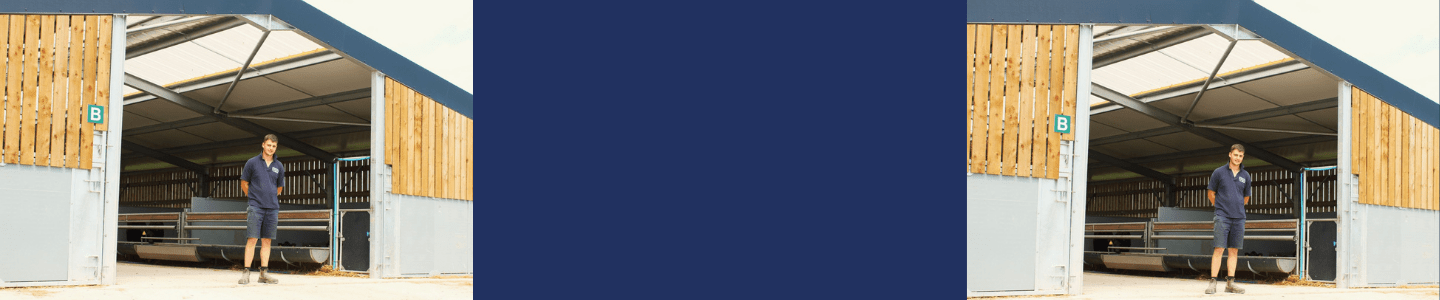
At just 26 years old, Phil Gilbert has built a thriving calf rearing enterprise in Lincolnshire, growing from 40 calves to capacity for 2,400 in just five years.
What began as a small family farm with a few sheds and beef cattle has developed into a large-scale, specialist calf rearing unit, supported by a long-term partnership with Buitelaar.
For Phil, the growth has been rapid, but carefully planned. With secure contract arrangements, technical support and a clear market for the calves he rears, he has been able to invest confidently in his business, his buildings and his team.
Philip took over the farm in 2020 following the death of his grandfather. At the time, the business was small, with a handful of buildings and some beef cattle.
After coming into contact with Buitelaar, Phil saw an opportunity to take the farm in a new direction. The beef cattle were replaced with starter calves, and what began with 40 calves quickly grew to 80, then 200, and continued to expand from there.
Today, the farm has capacity for 2,400 calves, with six sheds used for milk-fed calves and a further six for weaned calves.
This growth has been underpinned by a long-term contract with Buitelaar, giving Phil the confidence to invest in infrastructure and meet financial commitments while building a sustainable future for the business.
Phil specialises in producing strong starter calves at around 120kg. Once they leave his unit, the calves move on to finishing farms across the UK.
The majority of calves on the farm are dairy-beef crosses, typically from Holstein cows bred to beef sires such as Angus, Belgian Blue, Longhorn and Hereford. As the UK dairy sector has increasingly adopted sexed semen, the availability and type of calves entering the beef supply chain has changed significantly.
Calves arrive on Philip’s farm at between 14 and 28 days old. From the moment they arrive, health protocols are a priority. Calves receive a nasal vaccination on arrival, followed by a further vaccination three weeks later. They are also treated for coccidiosis during the rearing period, and receive an IBR vaccination before leaving the farm.
With these measures in place, calves leave the unit after around 80 days, well prepared for the next stage of the supply chain.
A key part of Philip’s success has been a consistent approach to nutrition, housing and daily management.
The calves are fed a high-quality milk powder based on dairy raw materials, with whey and highly digestible proteins as key ingredients. Alongside this, they have access to concentrates, straw and fresh drinking water.
Milk is fed for the first five weeks after arrival. Once calves are weaned, they move into a separate shed where they have more space to continue growing.
Housing also plays an important role in calf health and performance. The sheds are naturally ventilated, with space boarding from one metre high on the front, rear and side walls. Warm air can escape through an open ridge, while closed pen divisions help prevent sideways draughts.
Combined with straw bedding, this approach supports the rearing of robust calves and helps reduce reliance on antibiotics.
Attention to detail is central to the way Phil manages the business. Calves are weighed every week, allowing him to monitor growth rates and assess the impact of any management changes.
The process is simple but effective: a weigh scale is placed in front of each pen, calves are weighed, and then they are allowed time in the feeding passage before returning to their group.
This regular performance monitoring gives Phil valuable insight into how calves are progressing and helps ensure they are meeting targets before moving on to finishing farms.
As the business has grown, so too has the need for reliable labour. Phil now employs three permanent members of staff to support the daily running of the farm, including feeding, bedding, health checks and weighing.
Finding people who are careful, responsible and committed to high standards is one of the ongoing challenges of a growing livestock business.
“Employees who can work meticulously and feel responsible for the company are few and far between,” says Phil.
For Phil, the next stage reflects the strength of the partnership he has built with Buitelaar.
“I am 100 percent satisfied with the collaboration with Buitelaar,” he says. “We really work together as partners. They help me with the growth of my company. I help them with the efficient rearing of good calves.”
Buitelaar works with farmers through long-term contract arrangements designed to give both parties confidence and stability. Contracts can range from five to 20 years, depending on the farm, the system and the ambitions of the business.
These agreements provide farmers with a clear structure for income, while Buitelaar supplies the calves and feed. Farmers are rewarded for their labour, buildings, maintenance, utilities and straw, with contracts tailored around calf spaces, growth performance or a combination of both.
For young farmers like Phil, this model can provide a route into expansion by reducing some of the uncertainty often associated with livestock enterprises.
Phil’s story shows what can be achieved when ambition, attention to detail and the right support come together.
In just five years, he has transformed a small family farm into a specialist calf rearing business with room for thousands of animals. With another major development already being planned, his partnership with Buitelaar is set to continue playing an important role in the next stage of growth.
For Buitelaar, working with farmers like Phil is central to building an efficient, reliable and high-performing dairy-beef supply chain, one that supports farmers, calves and customers across the UK.


